
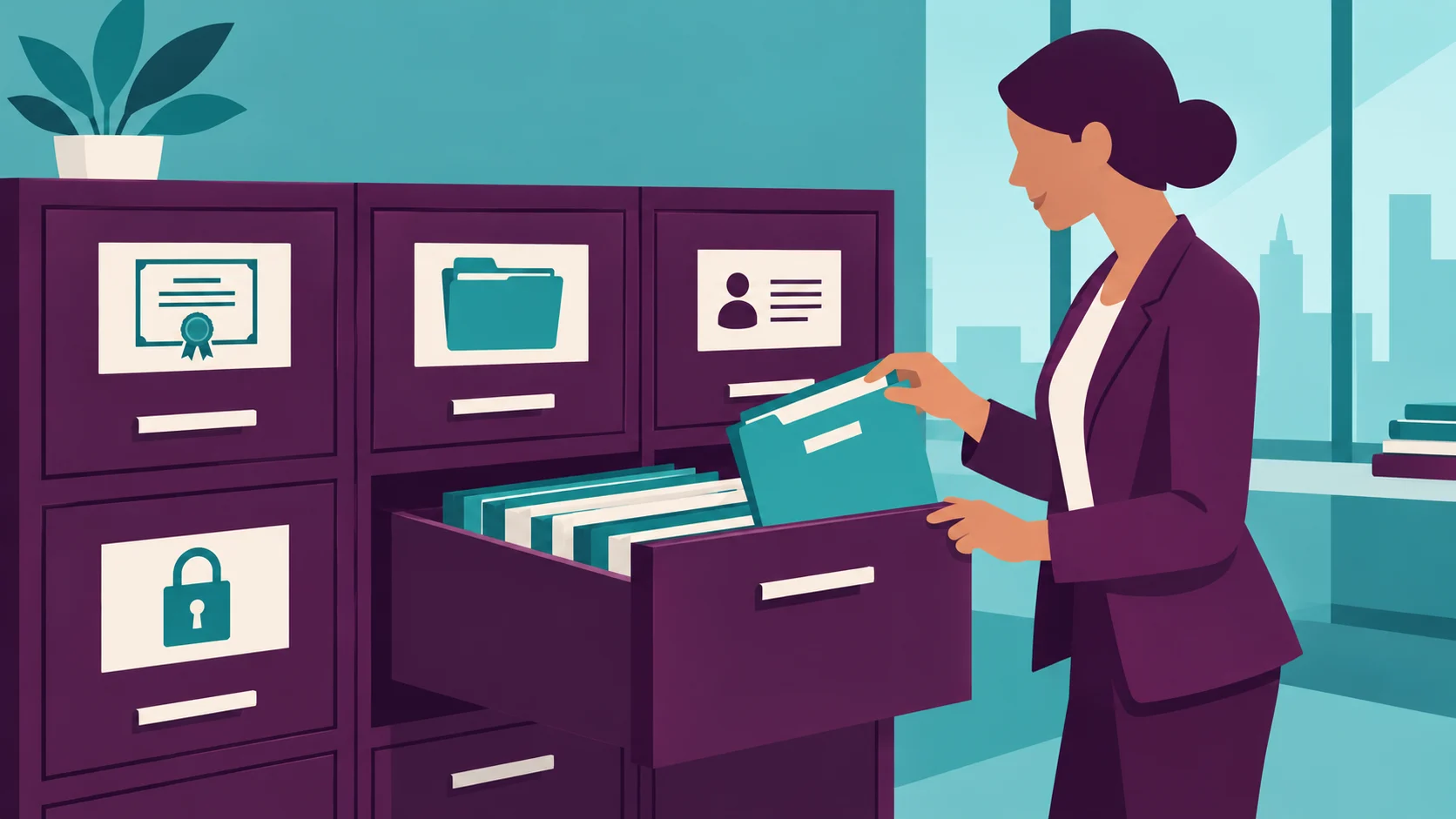
A career archive should make your next application easier without becoming a store of unnecessary sensitive data. Keep evidence organized while it is still easy to verify, and distinguish long-lived records from information that expires. Readiness means knowing what you have and what needs a fresh check.
Create a reliable core record
Maintain accurate employment dates, role titles, qualification details and professional registrations. Keep original records and usable copies in appropriate secure storage. Record any name differences or translation details that may need explanation later.
The National Careers Service recommends preparing work history, qualifications and relevant evidence before completing an application. Build that factual base once, then tailor each application. Do not assume a generic archive is a complete document checklist for every employer or immigration route.
Capture evidence while it is clear
Write a short private account of significant work: the problem, your contribution and the result you can support. Keep public or authorized portfolio links where appropriate. Separate your contribution from team outcomes and record how a number was established.
Do not copy confidential internal reports or client records into a personal folder. If you need evidence of employment or training, request an appropriate record through the employer process. An accurate summary can be useful without containing the underlying restricted material.
Track validity and permission
Note expiry dates for documents that have them, and check current acceptance requirements before reuse. A qualification may remain genuine while a particular assessment, translation or certification no longer meets a new process. Verify through the authority that will receive it.
Ask referees before sharing their details and keep their preferred contact information current. Do not assume agreement for one application authorizes indefinite circulation. Limit access to identity documents and avoid placing an entire archive in a public portfolio.
Keep versions and remove clutter
Save the actual CV and answers submitted for each serious application, alongside the vacancy details you are permitted to retain. Name files clearly enough to avoid sending an outdated draft or a version intended for a different role.
Review the archive periodically and remove copies you no longer need. Confirm backup and recovery arrangements without making the archive accessible to unnecessary people. A small, accurate and protected collection is more useful than a large folder of uncertain dates, duplicate scans and unsupported claims.
Sources and further reading
Source guidance checked on October 28, 2026. The exercises and examples above are editorial suggestions, not hiring guarantees. Follow current employer instructions and destination-specific official requirements.
Continue your job-abroad plan
- Read our guide: keep your job search documents safe while applying abroad.
- Read our guide: returning to work abroad after a long break.