Billy Joel’s career connects the working musician behind “Piano Man” with the arena performer who made Madison Square Garden a regular home. Celebrity Net Worth currently estimates his net worth at $250 million. The page does not display a last-updated date, and the figure is a third-party estimate rather than an audited account of Joel’s personal finances.
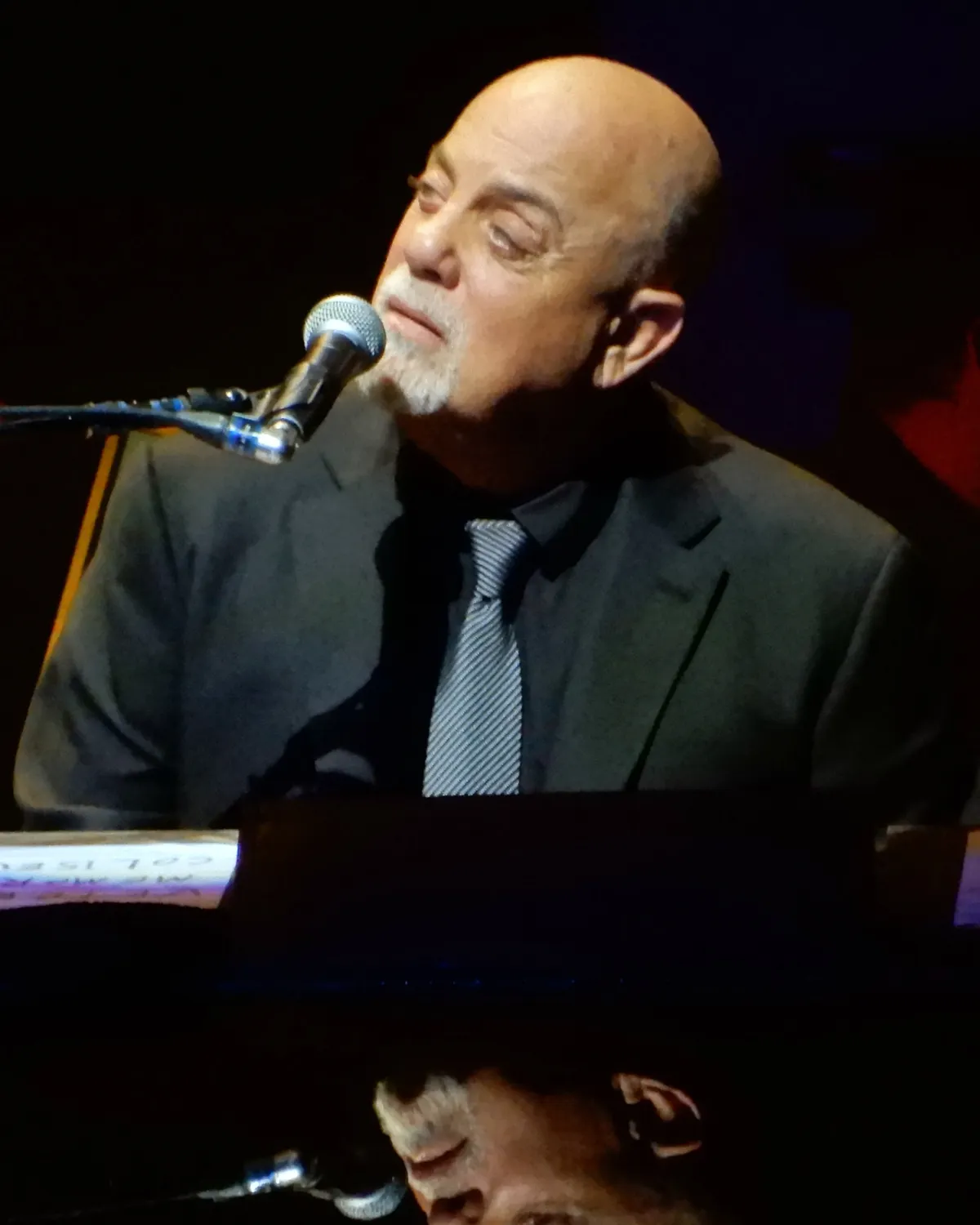

Billy Joel net worth: what the estimate does not tell us
The $250 million estimate provides a headline, not a complete financial statement. Celebrity Net Worth discusses Joel’s recording career, concerts and property transactions, but its figure should not be read as money in a bank account. This profile has not independently verified his private assets, debts or expenses.
Concert ticket revenue is also different from an artist’s personal income. A residency’s gross sales cannot simply be added to an estimated fortune, and a house’s asking price is not the same as a completed sale or net profit. The career milestones below explain the work behind Joel’s public reputation without inventing a breakdown of his royalties or annual earnings.
Background: the Bronx, Long Island and early bands
Joel’s official timeline records his birth as William Martin Joel on May 9, 1949, in the Bronx. His family moved to the Levittown section of Hicksville on Long Island, and he began piano study in 1953.
That timeline places him in the Echoes in 1963 and the Hassles in 1967. In 1970, he formed the duo Attila with drummer Jon Small. These early projects came before the familiar solo records and show that the career began with band work, not an immediate arrival as an arena headliner.
1971 to 1978: finding the voice behind Piano Man
The official chronology dates Joel’s first solo album, Cold Spring Harbor, to 1971. A contractual dispute took him to the West Coast, where he performed in piano bars under the name Bill Martin. His 1973 Columbia album Piano Man gave that barroom perspective a much wider audience.
In 1976, Joel returned to New York and recorded Turnstiles. The next year brought The Stranger, his first album collaboration with producer Phil Ramone. 52nd Street followed in 1978. This sequence established the mix of character sketches, piano-led ballads and rock songs that runs through his concert repertoire.
The Recording Academy identifies “Just the Way You Are” as the source of his first Grammy wins, for Record and Song of the Year. Its ceremony archive dates the Song of the Year presentation to February 15, 1979. That ceremony date is distinct from the earlier recording period.
1980 to 1993: rock songs, vocal pop and River of Dreams
Joel’s official store dates the original release of Glass Houses to March 12, 1980, and lists “You May Be Right” and “It’s Still Rock and Roll to Me” among its tracks. The store page also carries a 2025 vinyl release date, which should not be confused with the original album date.
The official album catalog dates An Innocent Man to August 8, 1983. Its track list includes “Uptown Girl,” “The Longest Time” and “Tell Her About It.” The 1989 album Storm Front, recorded with producer Mick Jones, included “We Didn’t Start the Fire,” according to the official timeline.
The original release of River of Dreams was August 10, 1993. Its songs include the title track and “Lullabye (Goodnight, My Angel).” These releases show the range within his catalog without requiring a claim about present-day record sales or royalties. For another songwriter with a long recording and live-performance career, see our Sting profile.
2014 to 2024: a Madison Square Garden chapter
MSG Entertainment’s July 24, 2024 account dates the residency’s start to January 2014. It distinguished the 104 performances in that residency from Joel’s 150 lifetime shows at the venue, including his earlier concerts.
CBS New York reported on July 26, 2024 that the final residency concert had taken place the previous night. July 25, 2024 therefore marked the close of that specific run, not a declaration that Joel had ended his entire career. The show’s ticket sales are not treated here as his take-home earnings.
Joel’s official catalog gives February 1, 2024 as the release date of “Turn the Lights Back On.” The release announcement credits Freddy Wexler as producer and lists Wexler, Arthur Bacon, Wayne Hector and Joel as writers. It is a dated return to new material, not evidence of an undisclosed recording fee.
2025 and 2026: a dated update on performances
A May 23, 2025 statement on Joel’s official site canceled his scheduled concerts following a diagnosis of normal pressure hydrocephalus. It said doctors had advised him to refrain from performing during recovery.
The Los Angeles Times reported on October 16, 2026 that Joel said further tests were needed before he could know whether he could perform again. That is the status described in that dated report, not a prediction about recovery or a new concert announcement.
Watch Billy Joel discuss songwriting
In this official Howard Stern Show interview clip, Joel discusses “Turn the Lights Back On” and working with Freddy Wexler.
Watch on YouTube. YouTube metadata identifies the uploader as The Howard Stern Show; playback availability can vary.
A catalog and a concert career
Joel’s documented career stretches from early bands and piano bars to studio albums and a long Garden residency. The $250 million figure remains an attributed estimate, while the albums, dates and performances can be traced to public records. Readers exploring other singer-songwriter careers can also read our profiles of Alicia Keys and John Legend.
Latest profiles