
Entrepreneur net worth is easier to understand when you separate the business from the person who owns part of it. Tesla sells vehicles and energy products. Meta sells advertising. Airbnb charges booking service fees. These companies create value in different ways, but company revenue is not the founder’s personal income, and a company valuation is not a cash balance.
This guide connects five Frotheen profiles to the businesses behind them. It is an explanation of business models, not a wealth ranking or investment advice. Company sources were checked on November 10, 2026; their publication dates are noted where available.
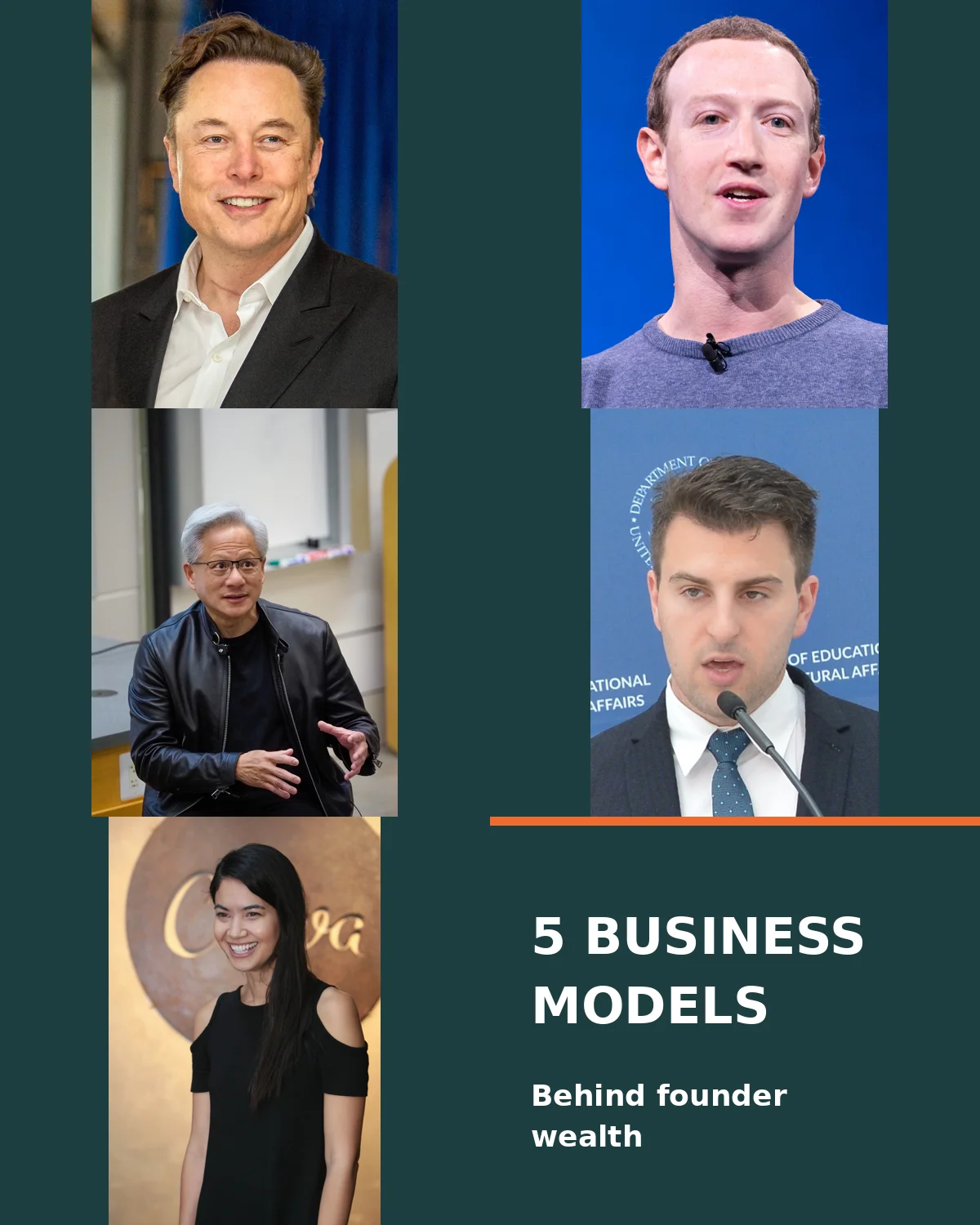


First, what does net worth actually measure?
The SEC’s Investor.gov guide defines a net-worth statement as what someone owns minus what they owe: assets less liabilities. For a founder, an ownership stake can be an important asset. Its estimated value is different from the salary the founder receives or the revenue the company reports.
That distinction matters when reading a net-worth profile. A valuable company can have expenses, debts, outside investors and restrictions on selling shares. A founder does not personally own every dollar in the company’s bank account. This guide does not estimate anyone’s ownership percentage or private debts.
1. Physical products and energy systems: Elon Musk
Tesla’s official biography describes Elon Musk as its co-founder and CEO, leading product design, engineering and manufacturing of electric vehicles, battery products and solar products. Its company overview connects vehicles, energy generation and storage.
The business-model distinction is physical production: customers buy products that require design, factories, materials and delivery. A founder’s wealth story is therefore not the same as the number of cars sold. To understand an estimate, look for the value attributed to the founder’s ownership, not a shortcut that treats total sales as personal wealth.
Read the career background and dated estimate in our Elon Musk net-worth profile.
2. Advertising-supported platforms: Mark Zuckerberg
Meta’s full-year 2025 results, published January 28, 2026, identify Mark Zuckerberg as founder and CEO and report advertising revenue. Advertising is a different route from selling a physical product: the platform connects advertisers with audiences using its services.
For readers comparing founder profiles, the useful question is how the business earns revenue. Advertising sales belong to the company. They are not a payment of the same amount to its founder. Changes in the perceived value of the business can affect an ownership-based wealth estimate without being the founder’s salary.
See our Mark Zuckerberg profile for his individual career and estimate.
3. Computing infrastructure: Jensen Huang
NVIDIA’s biography says Jensen Huang co-founded the company in 1993 and has served as president and CEO since its inception. NVIDIA’s data-center page describes a platform spanning computing hardware, networking and software.
This example shows why a founder profile needs more than a job title. A business can provide components and systems used by other businesses, rather than a service sold directly to consumers. When reading a fortune estimate, keep the company’s products, the founder’s role and the value assigned to a personal stake separate.
Read our Jensen Huang profile for more background.
4. Marketplace service fees: Brian Chesky
Airbnb’s company page identifies Brian Chesky as a co-founder and CEO. Its service-fee explanation says it charges a service fee when a booking is confirmed. The current policy describes different structures and a transition between them, so this guide does not freeze a particular fee rate into a long-lived article.
The useful distinction is between the total value of a booking and the platform’s fee. Money paid for a stay is not all revenue retained by the platform, and neither is the founder’s personal income. That is why booking totals alone cannot establish a founder’s net worth.
5. Free tools and paid subscriptions: Melanie Perkins
Canva’s company information names Melanie Perkins, Cliff Obrecht and Cameron Adams as its founders. It describes free and paid products. Canva’s October 30, 2025 announcement introduces Canva Business as a subscription for individuals, marketers and small teams.
The model combines a free entry point with paid capabilities. For a founder-wealth reader, the questions are different from those for a marketplace: which customers pay for the software, and what evidence supports the value assigned to the business? A subscription price or user count is not itself a personal fortune estimate.
Read our Melanie Perkins profile.
How to compare entrepreneur net-worth profiles
- Check whether a figure refers to a person, a household or an entire company.
- Keep the source’s estimate date separate from the day an article was checked.
- Do not treat revenue, profit, salary, company valuation and personal net worth as interchangeable.
- Look for attribution and stated uncertainty rather than treating an estimate as audited personal accounts.
The five examples above are not a leaderboard. They show why similar-looking fortunes can depend on very different businesses. Use the linked profiles for career context and their separately dated estimates, and the linked company sources for how the businesses work.
Latest business profiles